March - April 2025Michael Ajerman.
Can’t You Hear Me Knocking.
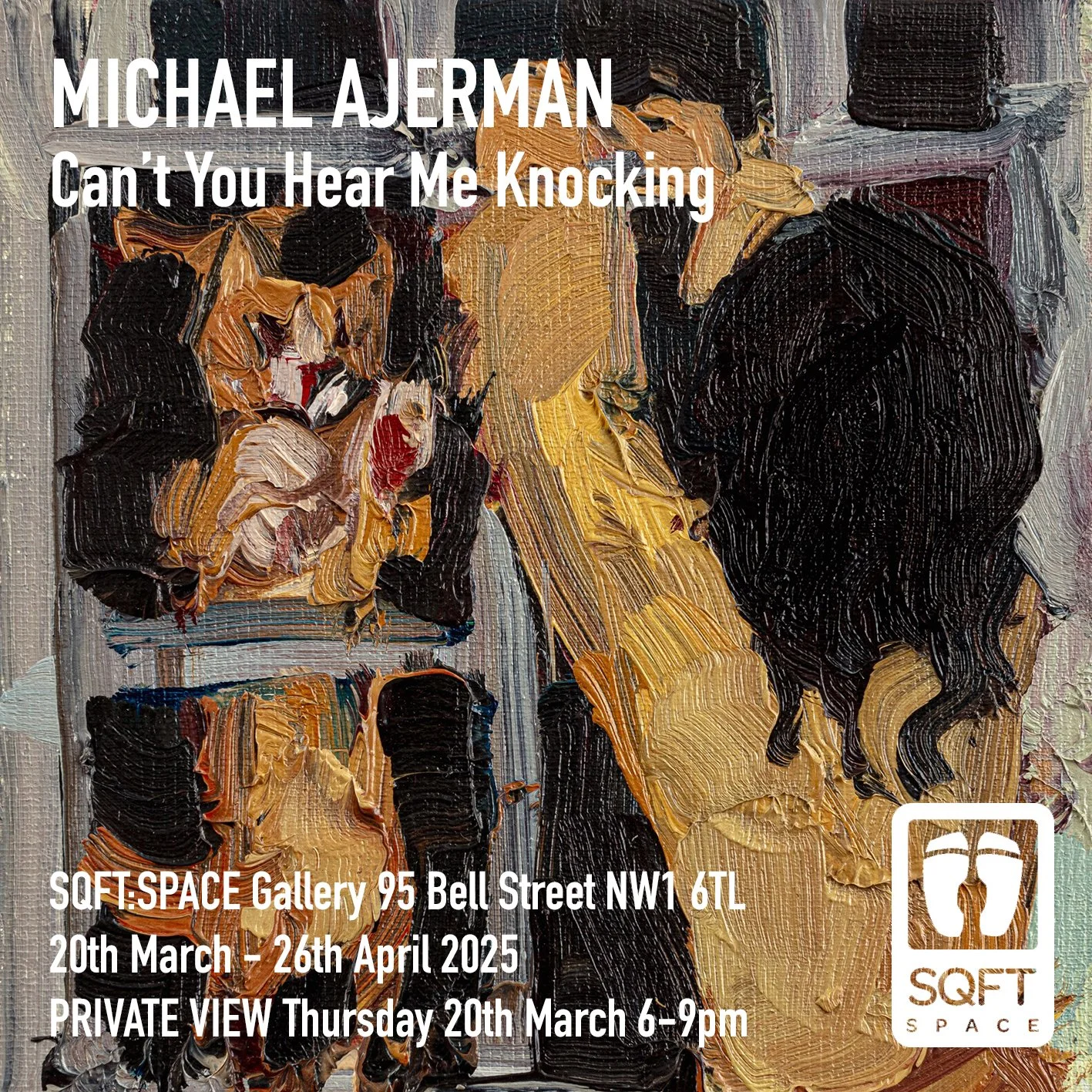
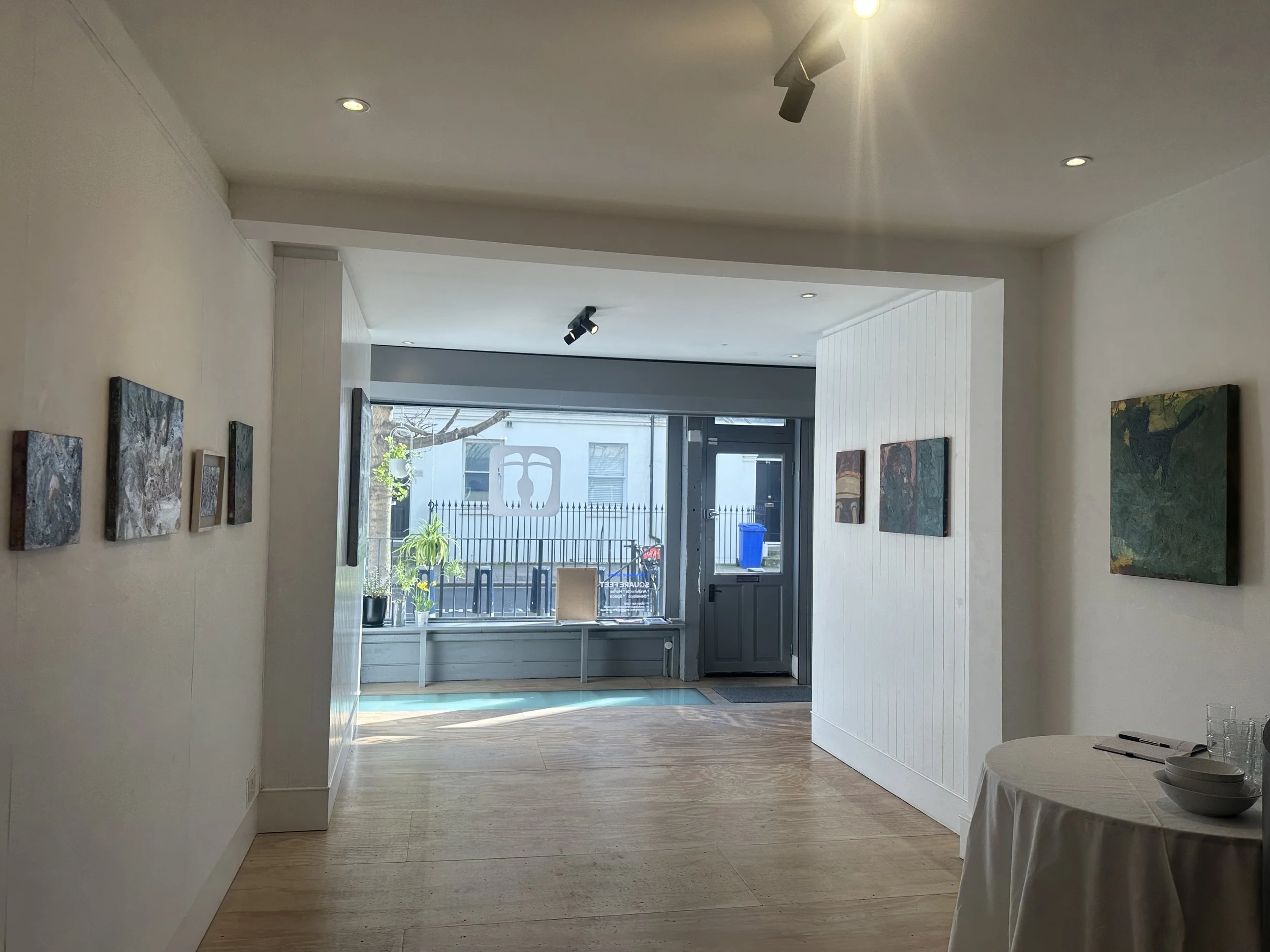
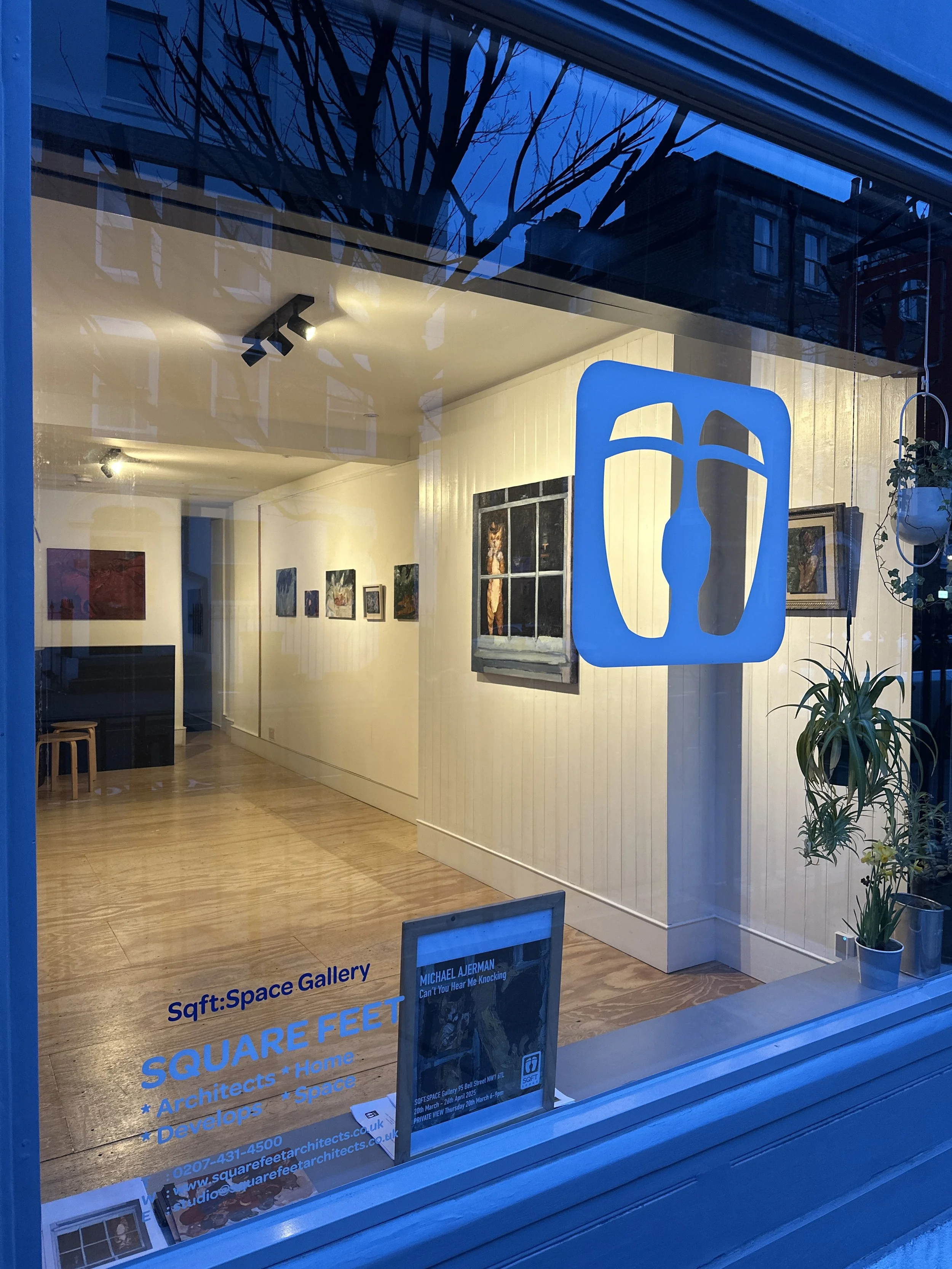
SQFT: Space Gallery presents Michael Ajerman’s solo exhibition, Can’t You Hear Me Knocking.
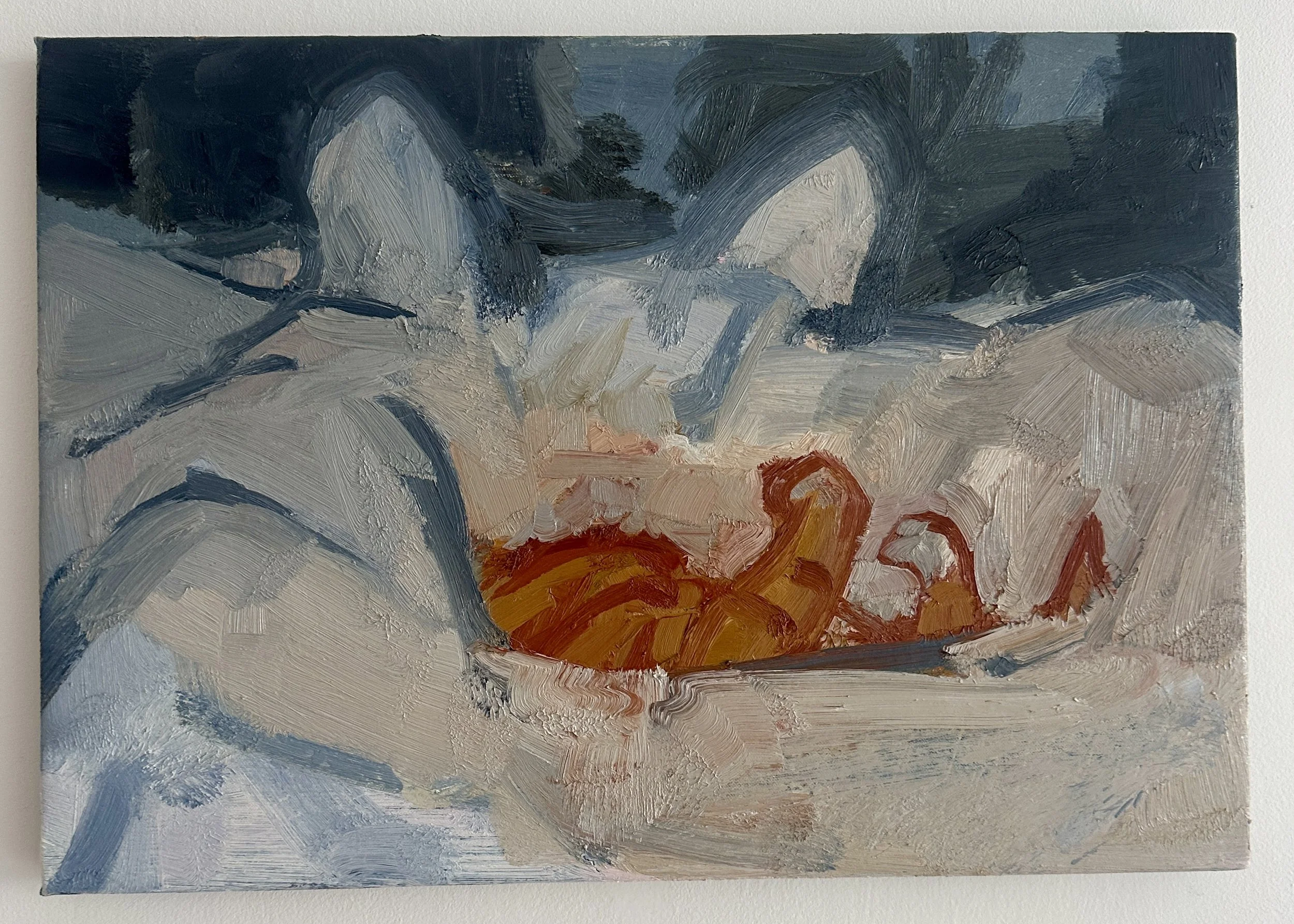
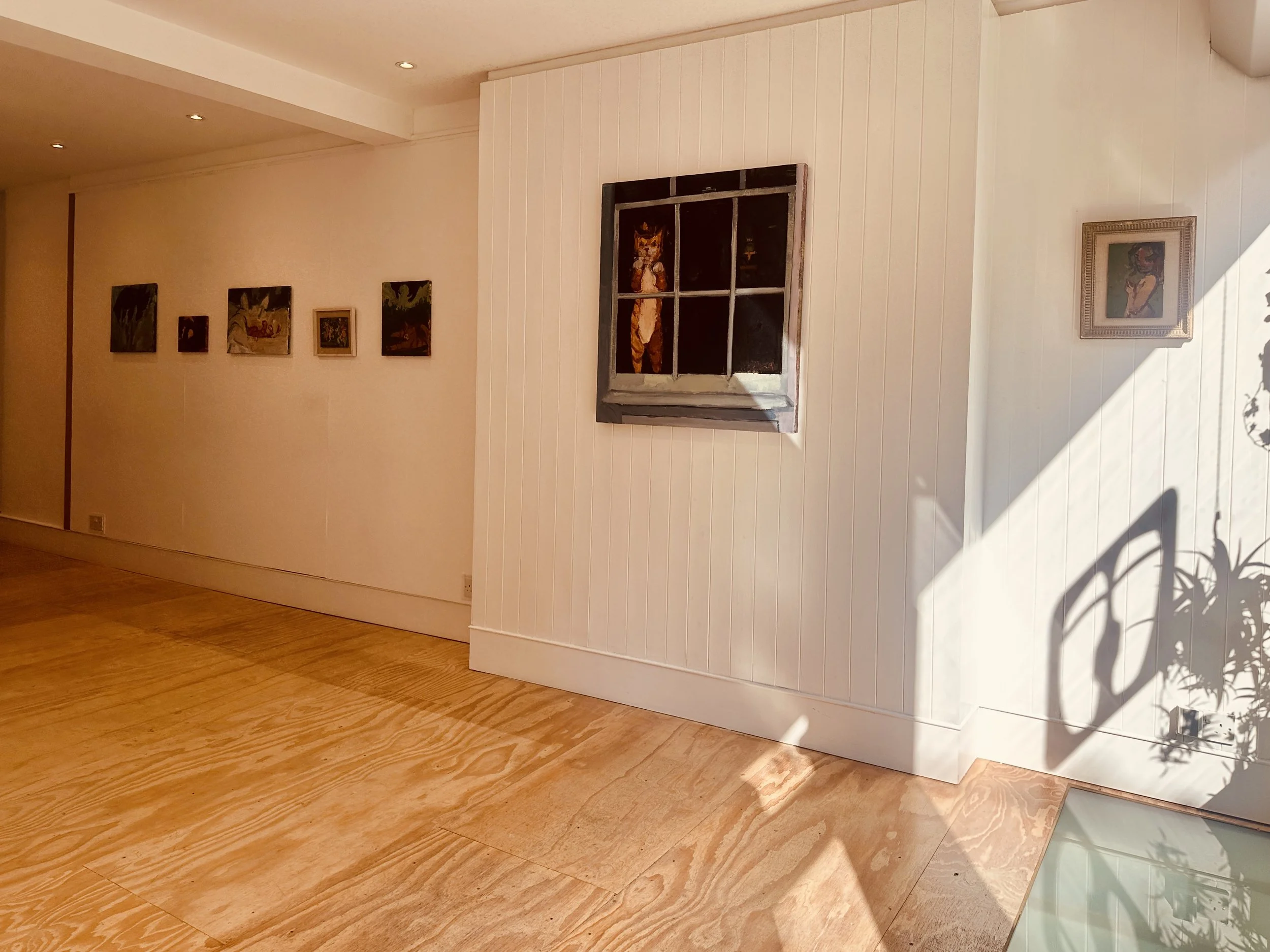
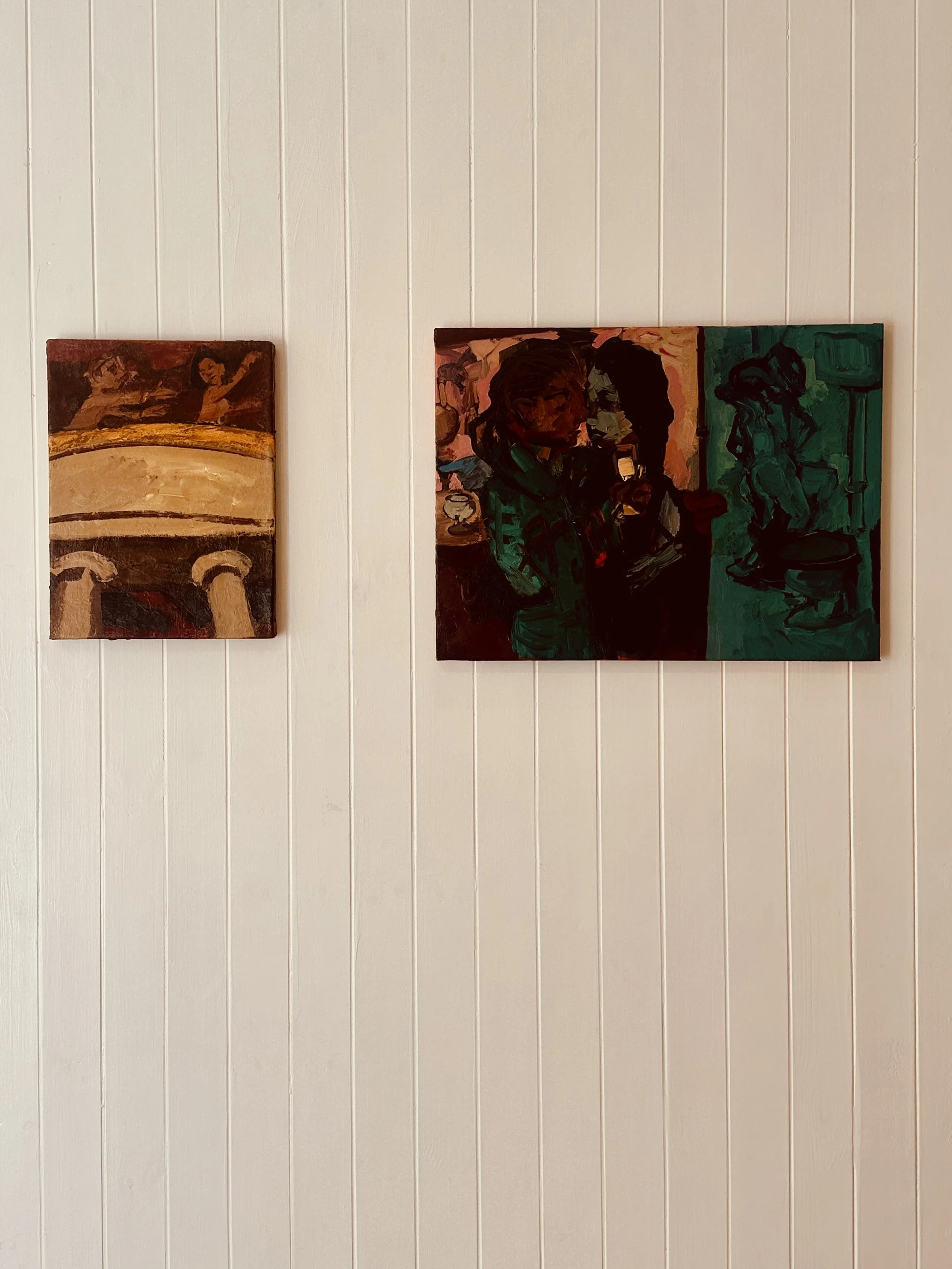
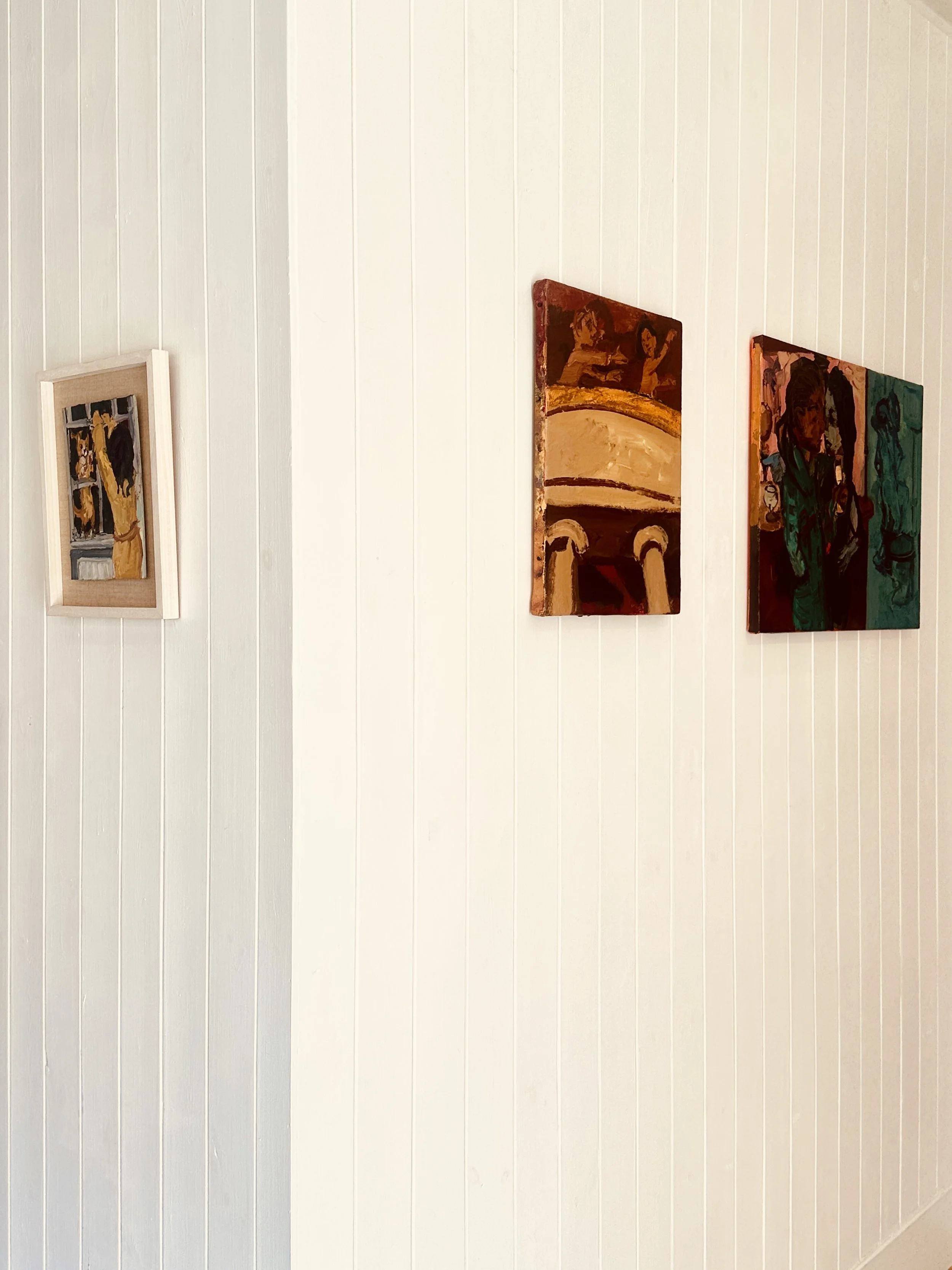
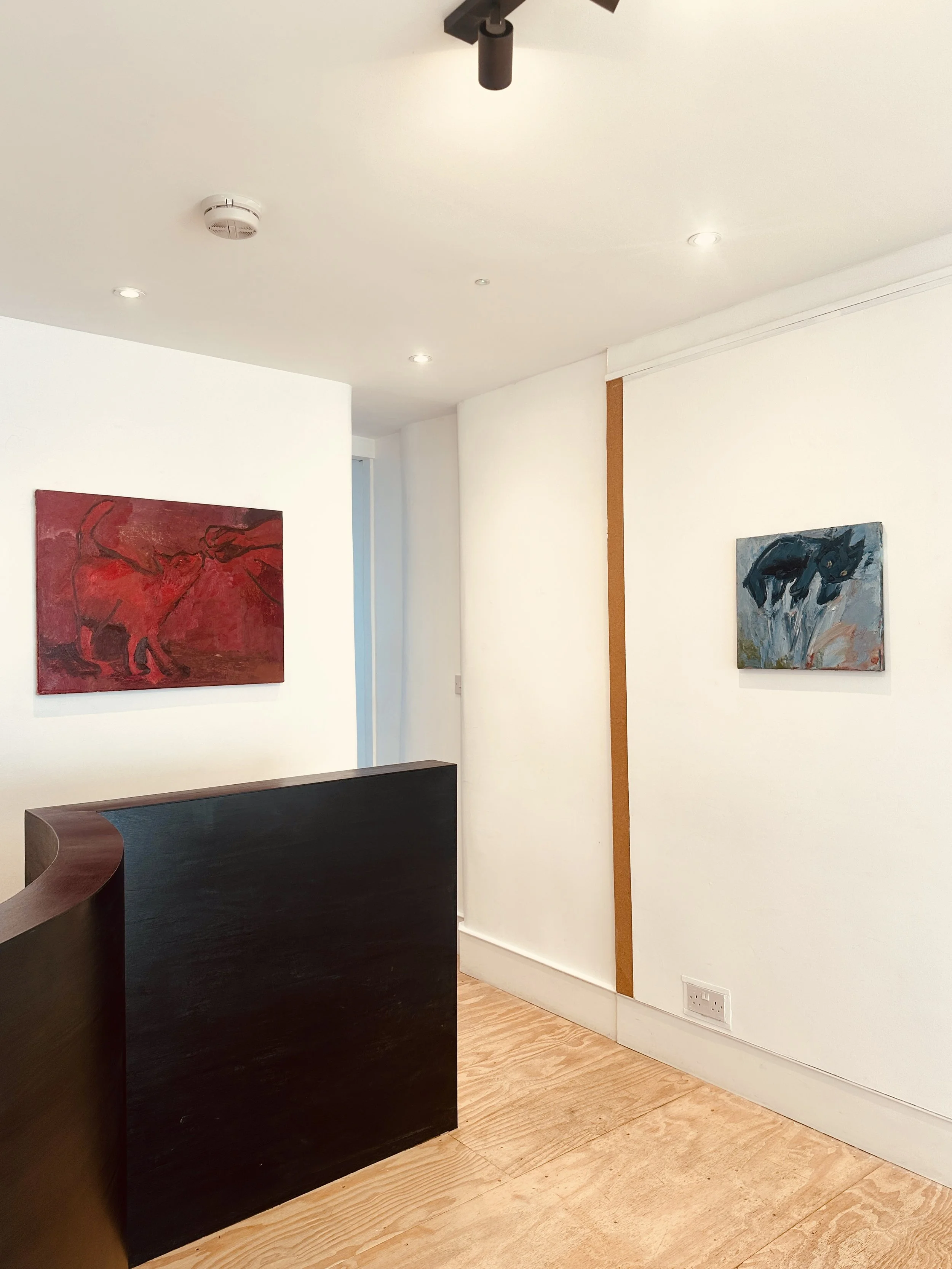
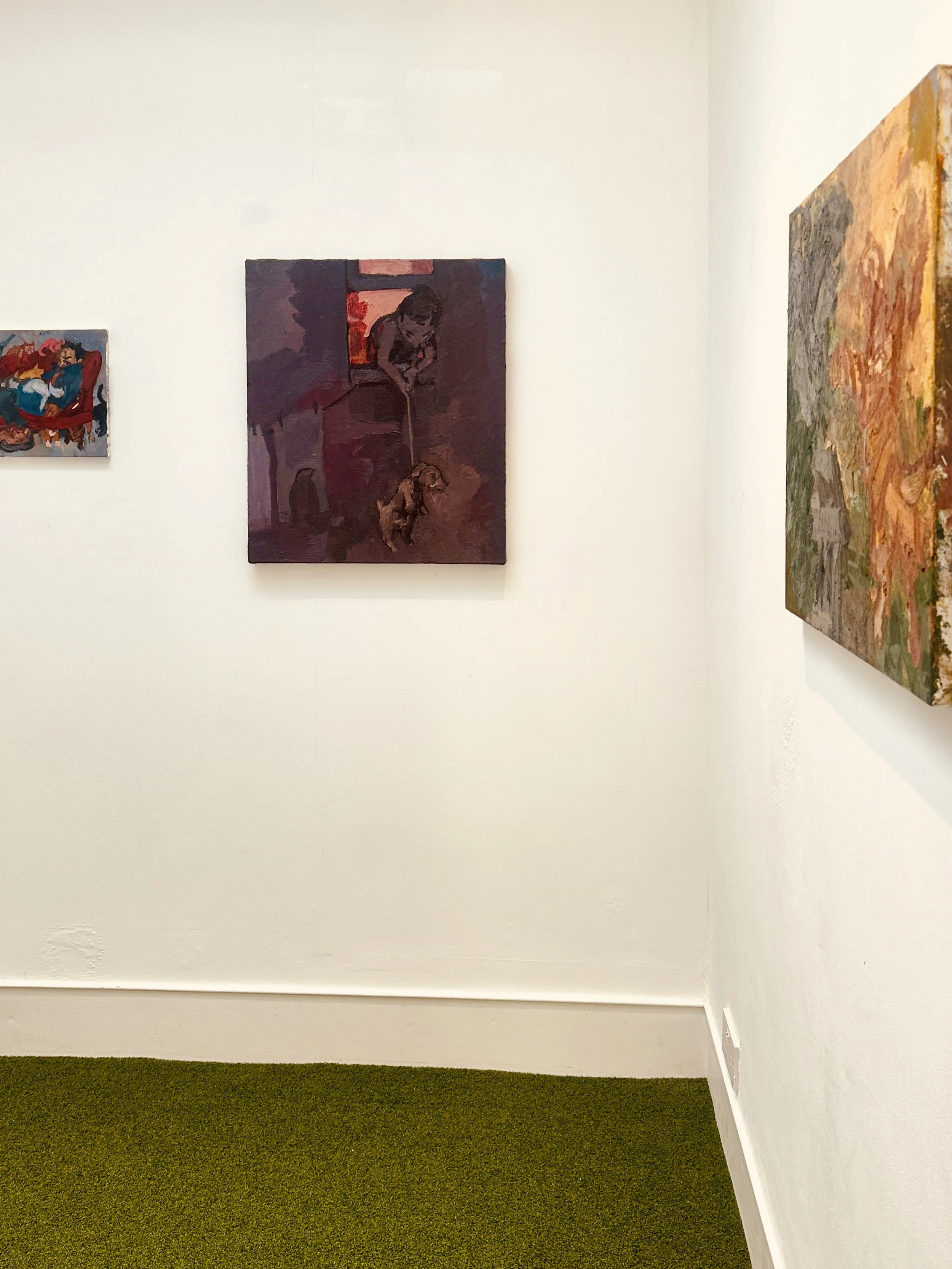
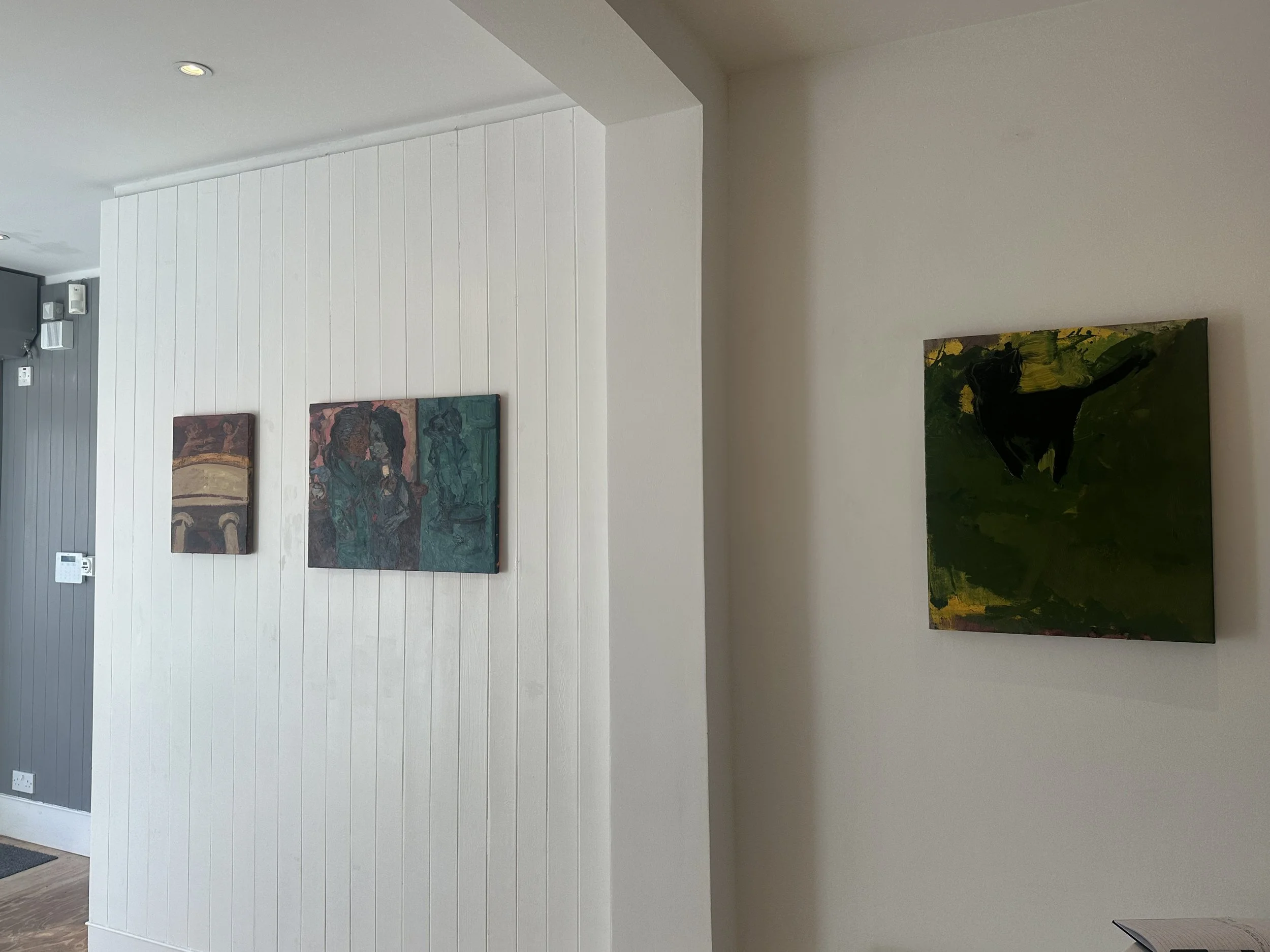
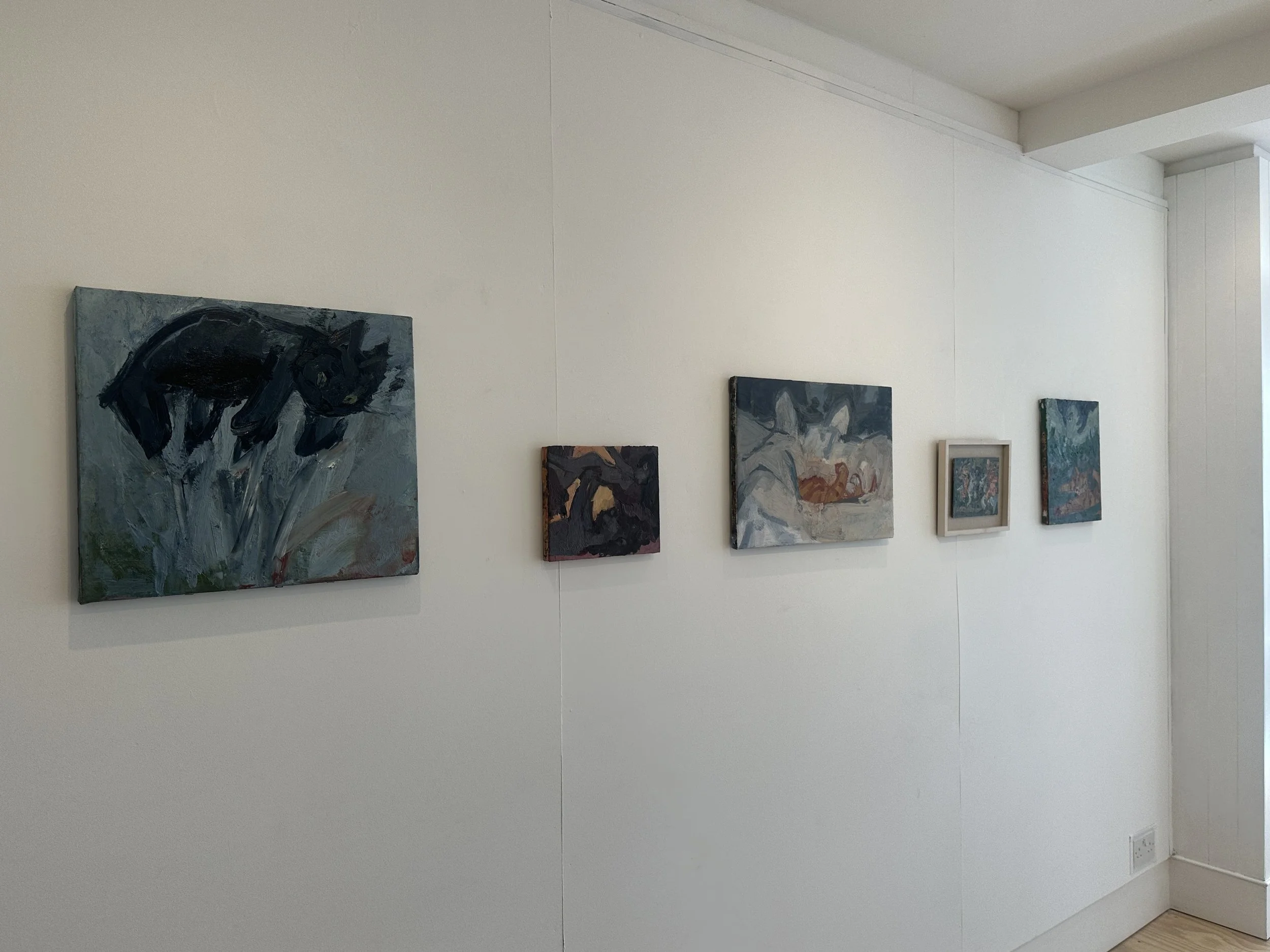
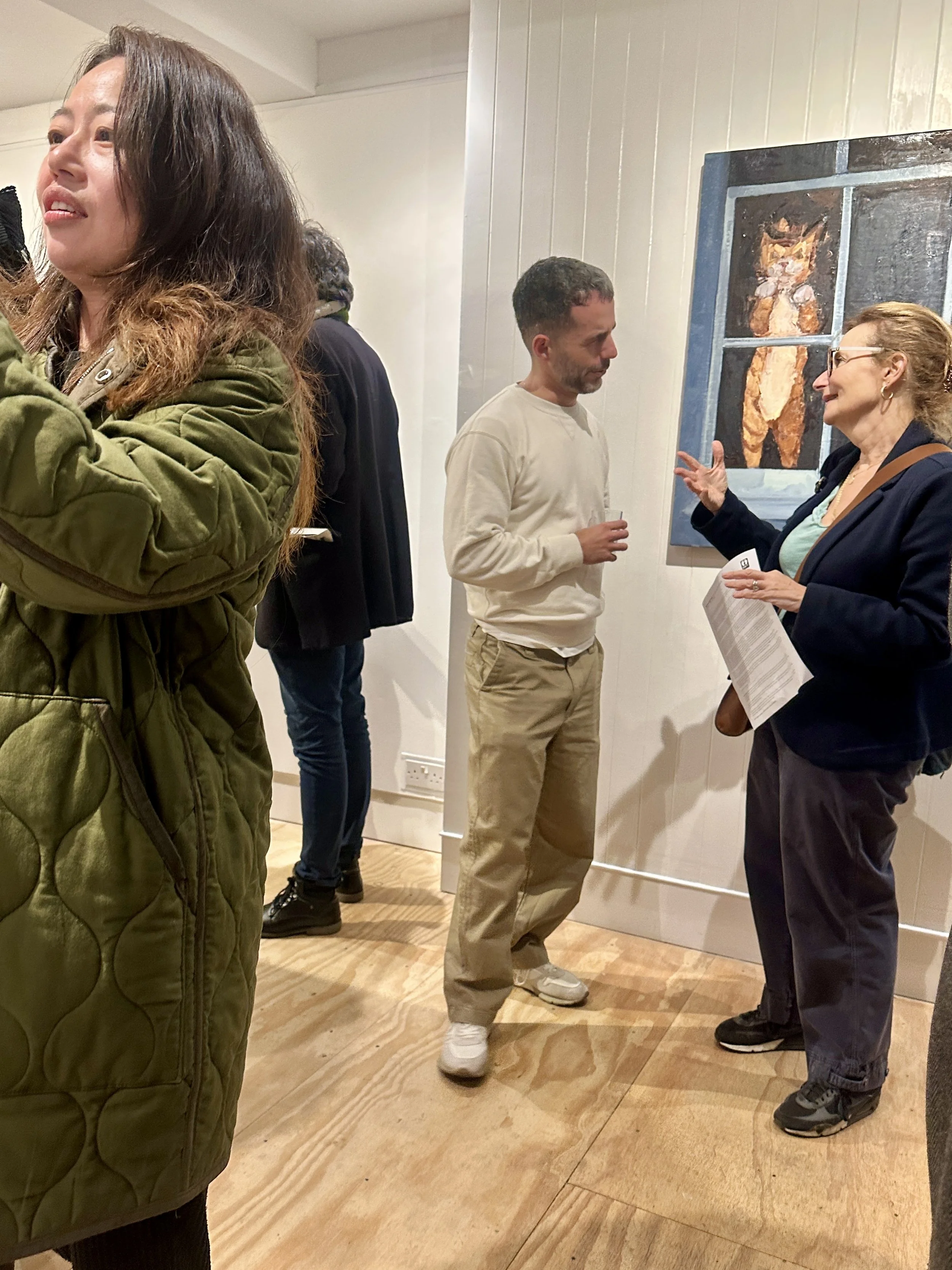
Presenting recent paintings exploring his visceral use of colour to explore the human body and animals. These activated depictions permeate interior and exterior environments.
Michael Ajerman once had a gallerist bemoan the frenzy of his works. "Your paintings
are so energetic," they said, "we can't put anyone else's work next to yours." The absurdity of that objection notwithstanding, if you did need to choose one word to encapsulate what Ajerman does, like a knot of colour in a glass marble, it would be spiky. Figures and shapes and lines and forces rail against the strictures of any given canvas, suggesting noise and restless muscle, an ever-threatened containment, an explosion inches from exploding.
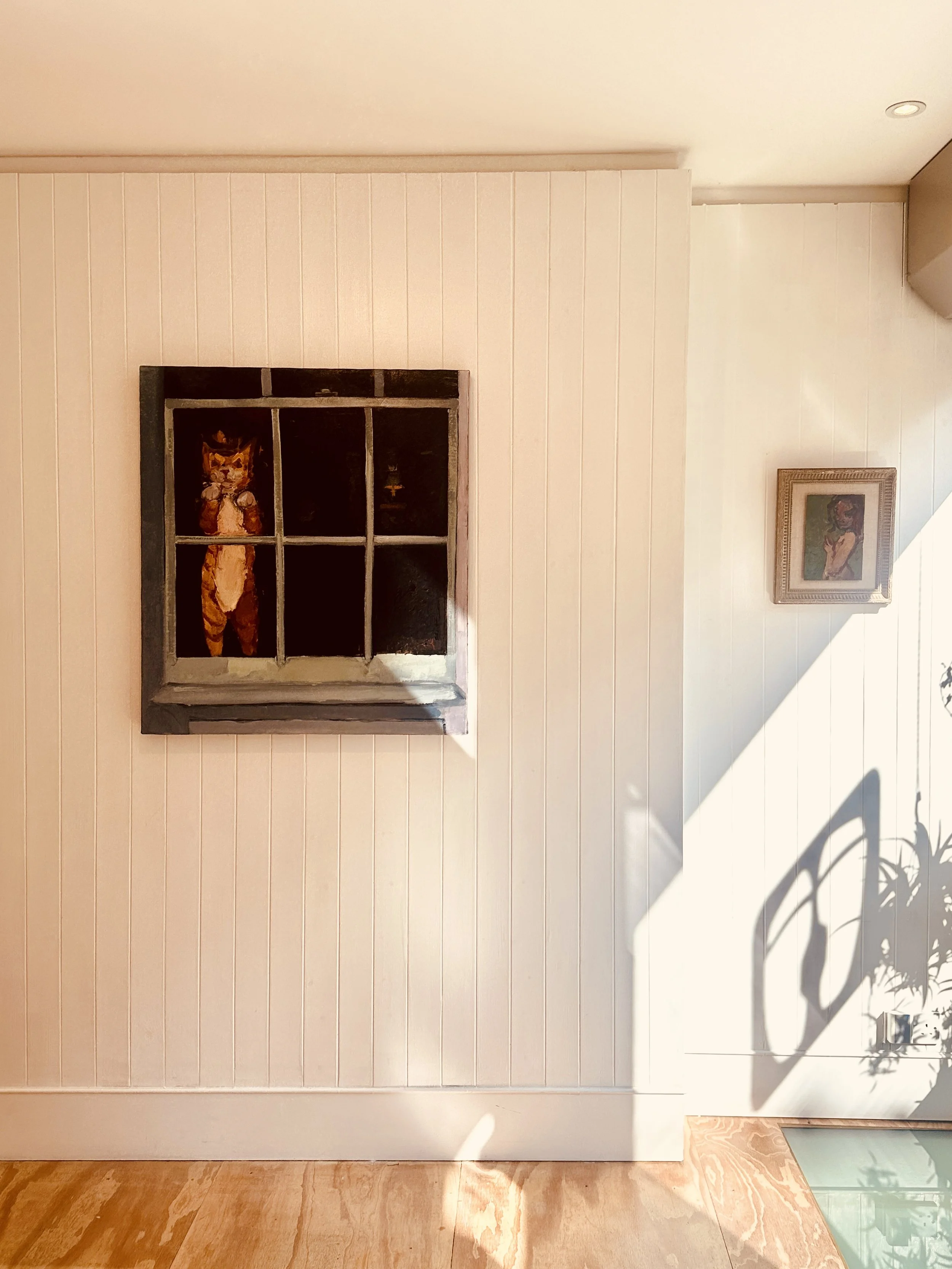
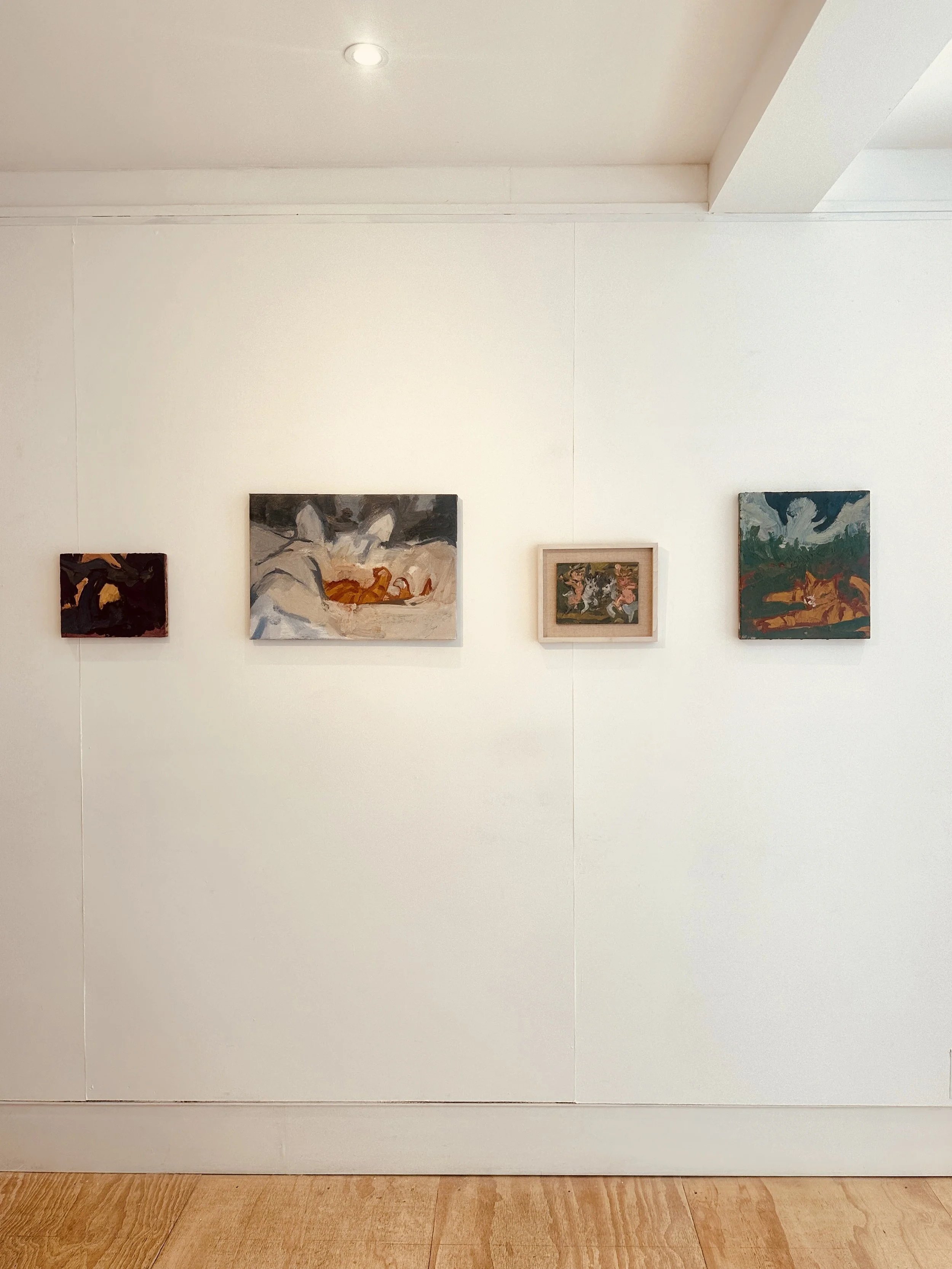
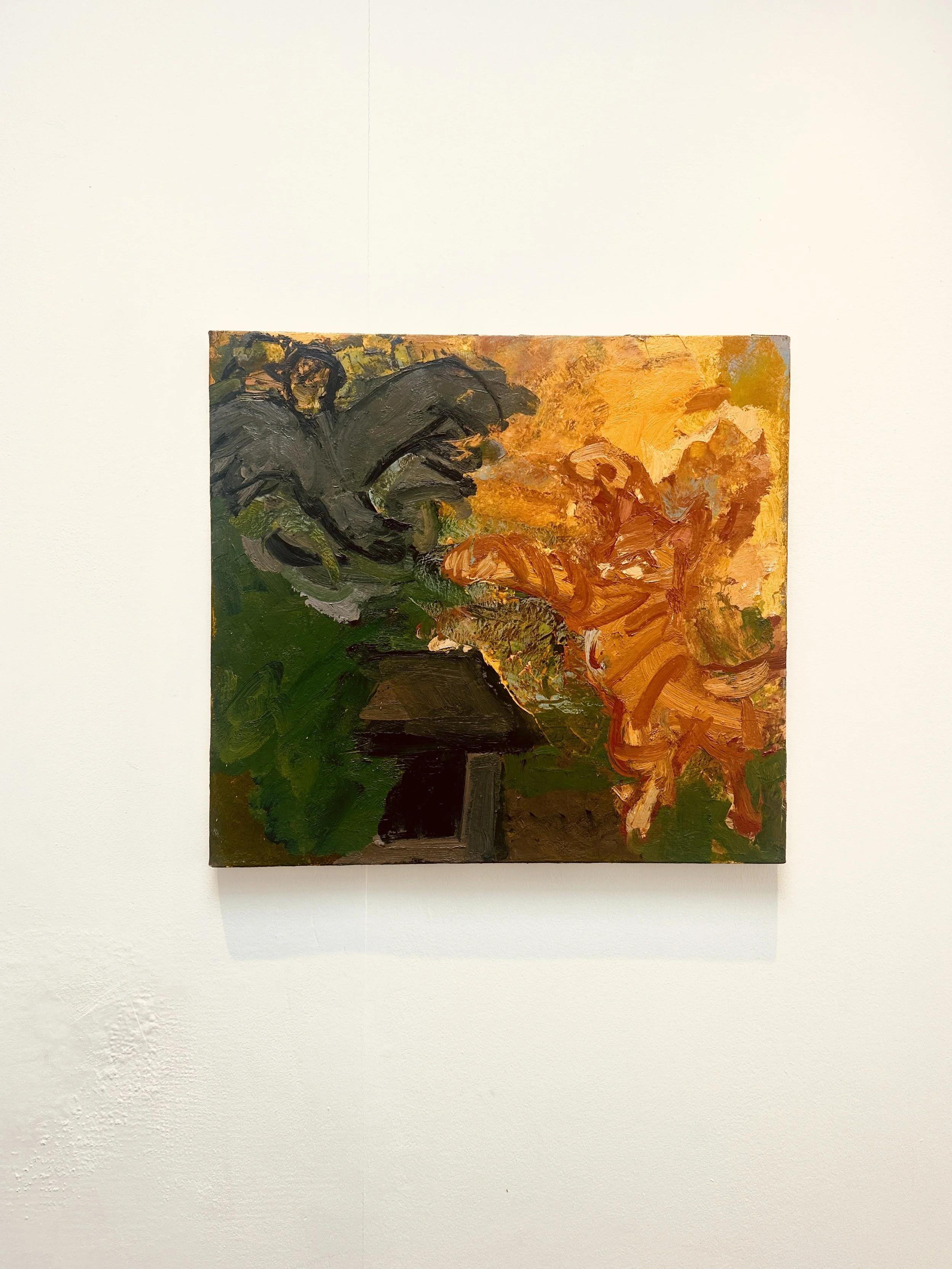
A few years ago, there was a war on his Camden street. He and his partner, Laura, had gone out for lunch then walked home. Within 20 minutes a roar had them back outside, watching two cats—Grendel and Couscous—going at each other with ferocious intent. Ajerman has come back to that Fight-Club-meets-Attenborough moment repeatedly ever since, mostly because, as he puts it, Grendel has brought him back to painting. See Almost, a rectangle divided on the diagonal across which a twisting felines become a crow or banshee.
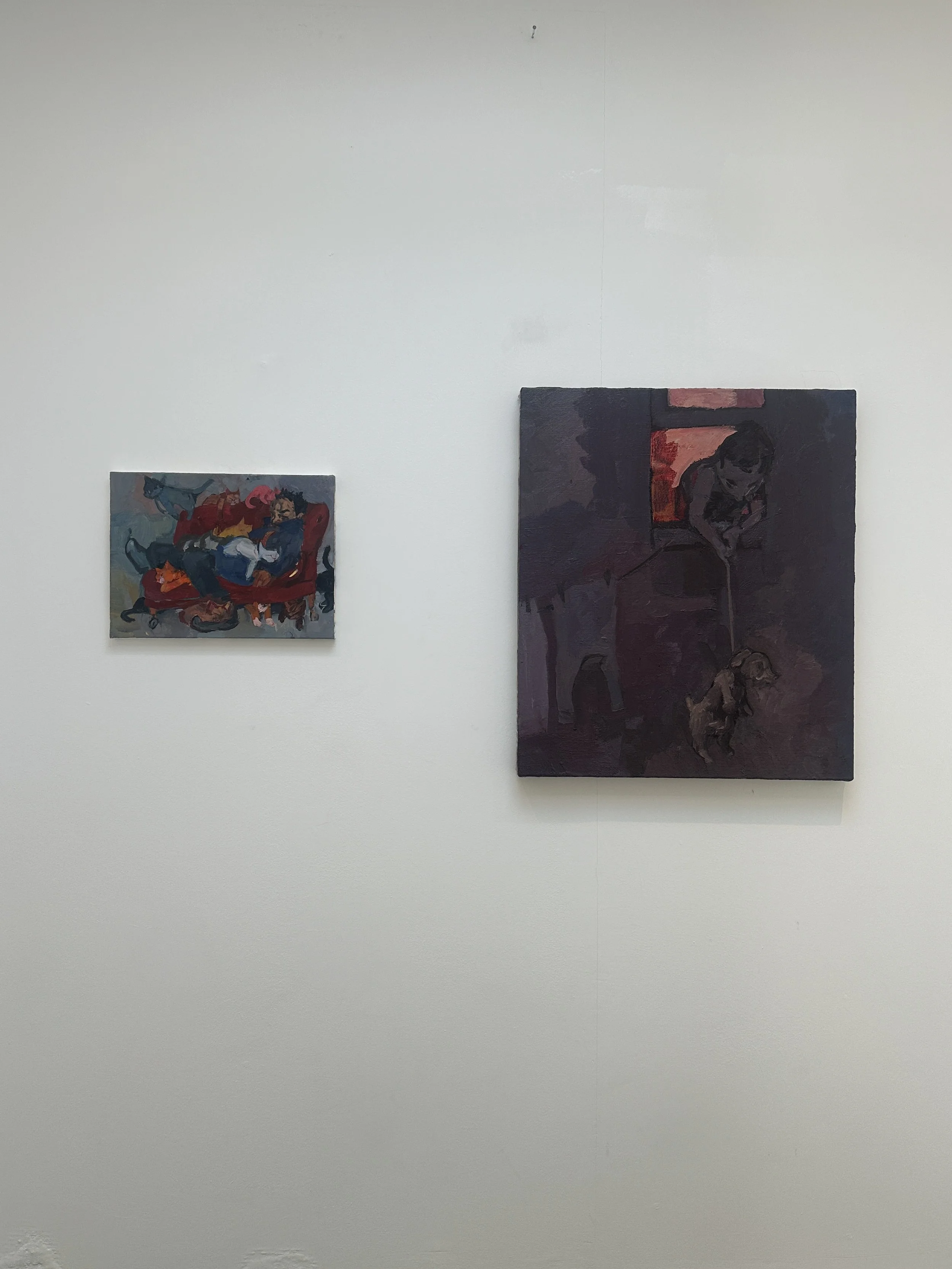
A combination of Covid and bone-deep grief at the loss of a close friend sent Ajerman spiralling into a kind of existential crisis, where the reason for painting at all was lost to the chaos of the world. He points to one drawing, which, from this side of his most recent body of work now on show, looks like a new beginning, but at the time only underscored his hopelessness. He'd drawn, unusually for him, inspiration from a news story. In the early days of lockdown, an Italian woman had been videoed dangling her dog by a long leash from a first-story window so it could do its business while she was confined inside. It was a defiant gesture and, as images go, a kind of madness. As such it presages the direction in which trying to depict Grendel has taken Ajerman's work since.
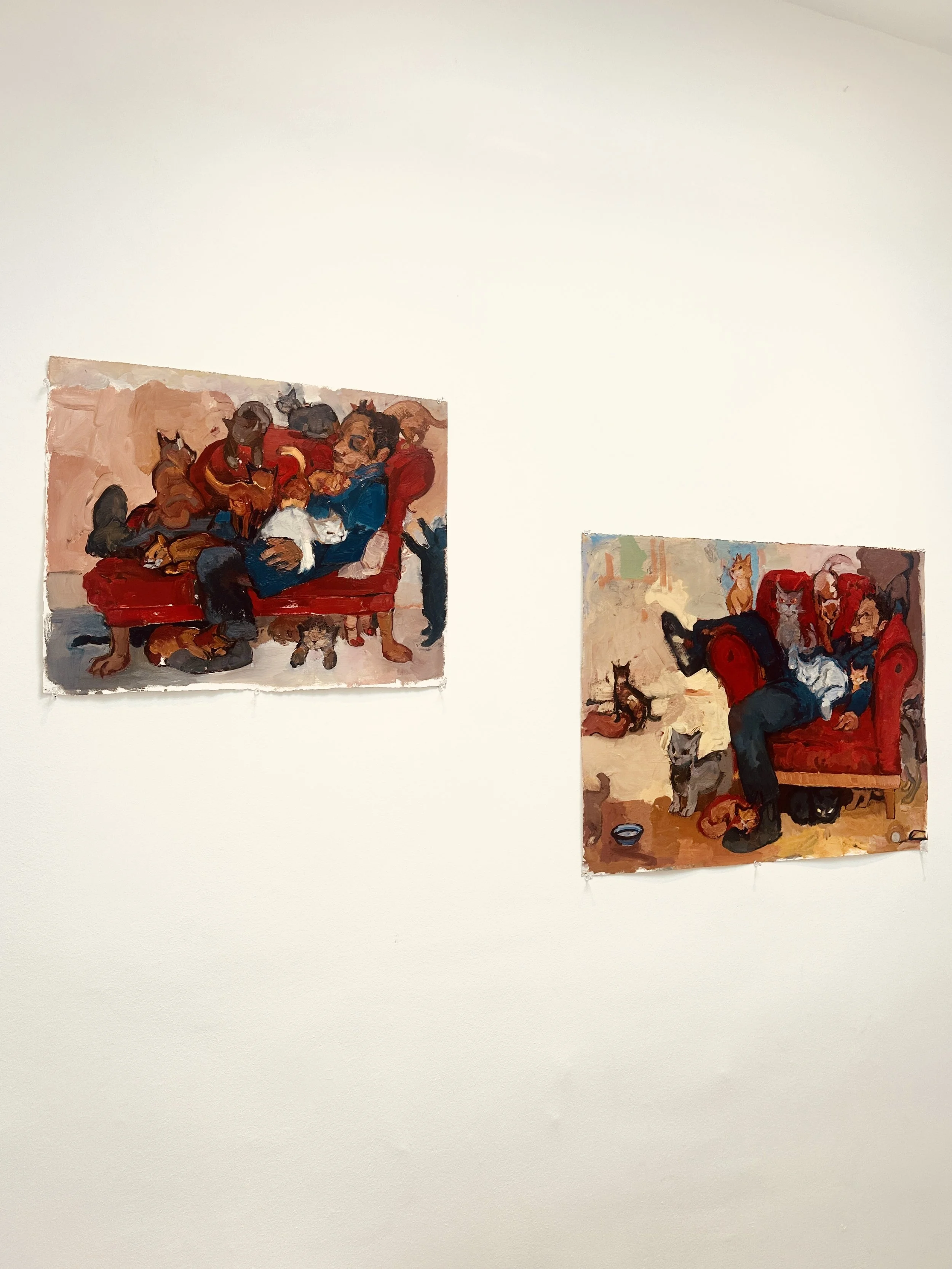
At first, he had no idea what he was trying to do. Cats will sit, lie, nap and pounce but for how long, no one knows. Working with that level of unreliability unlocked a kind of new direction. He thought about David Hockney's Dog Days and Bonnard's use of cats. He sat with the muscularity of Egyptian cat sculptures. In Maria Lassnig's Körpergefühl and the physicality of Kazuo Shiraga's practice—the unresolved spaces inside his marks—he found something he needed. He clocked the dogwalkers Frank Auerbach recorded on early morning walks on Primrose Hill and the altogether more sedate cats he included in two domestic scenes: Stella West with her daughters and Julia with Jake at the table. An anecdote about Balthus reportedly living with 40 cats in the South of France, meanwhile, suggested the image of a painter napping under a pile of furballs: the Reposto series duly workshops the idea of the artist as a mad cat lady.!
The resulting works are a kind of wild playbook. A series of small canvases barely containing an electric lifeform: Oscar's Levitation, comic-like in its bounce and shriek; Hunters and Prancer, both riffing on the surefooted intent any cat demonstrates when they're mid curbside mission. Everywhere, Ajerman deploys the kind of jagged summary gestural marks Auerbach so often uses to capture the essence of a dynamic shape in a landscape or a face.!
Even when they're not attempting to distill movement, Ajerman's new works vibrate. Someone recently asked Ajerman if he still likes "doing this", that is, making work. "Yeah," he replied, "I kinda like it more now. I literally laugh in here, either because it's not going well, or because something really exciting happens, or something happens in the picture." Painting as the sound of something happening.!
- Dale Berning Sawa!
——————————————————————————————————————-
Michael Ajerman was born in New York. As a teenager he took part in the Cooper Union Outreach Program, afterwards studying at the Corcoran School of Art, the New York Studio School and the Yale Summer School at Norfolk. In 2003, he completed his Masters Degree at the Slade School of Art, receiving the British Institute Award from the Royal Academy the same year.
He has consistently exhibited internationally in solo and group shows. With work selected by the David Zwirner website Platform in 2022. His work is currently shown in the Courtauld Institute’s East Wing V1 in London. In 2018, he was awarded UCLA’s Kitaj Research Fellowship.
Select press includes The New York Times, Flash Art, The Guardian, The Sun, Arte, Garageland, Bay Area Reporter and the Royal Academy Magazine. His work is found in international collections including the Beth DeWoody Collection and the Wendy Fisher Collection. He lives and works in London.